

HB series breakers
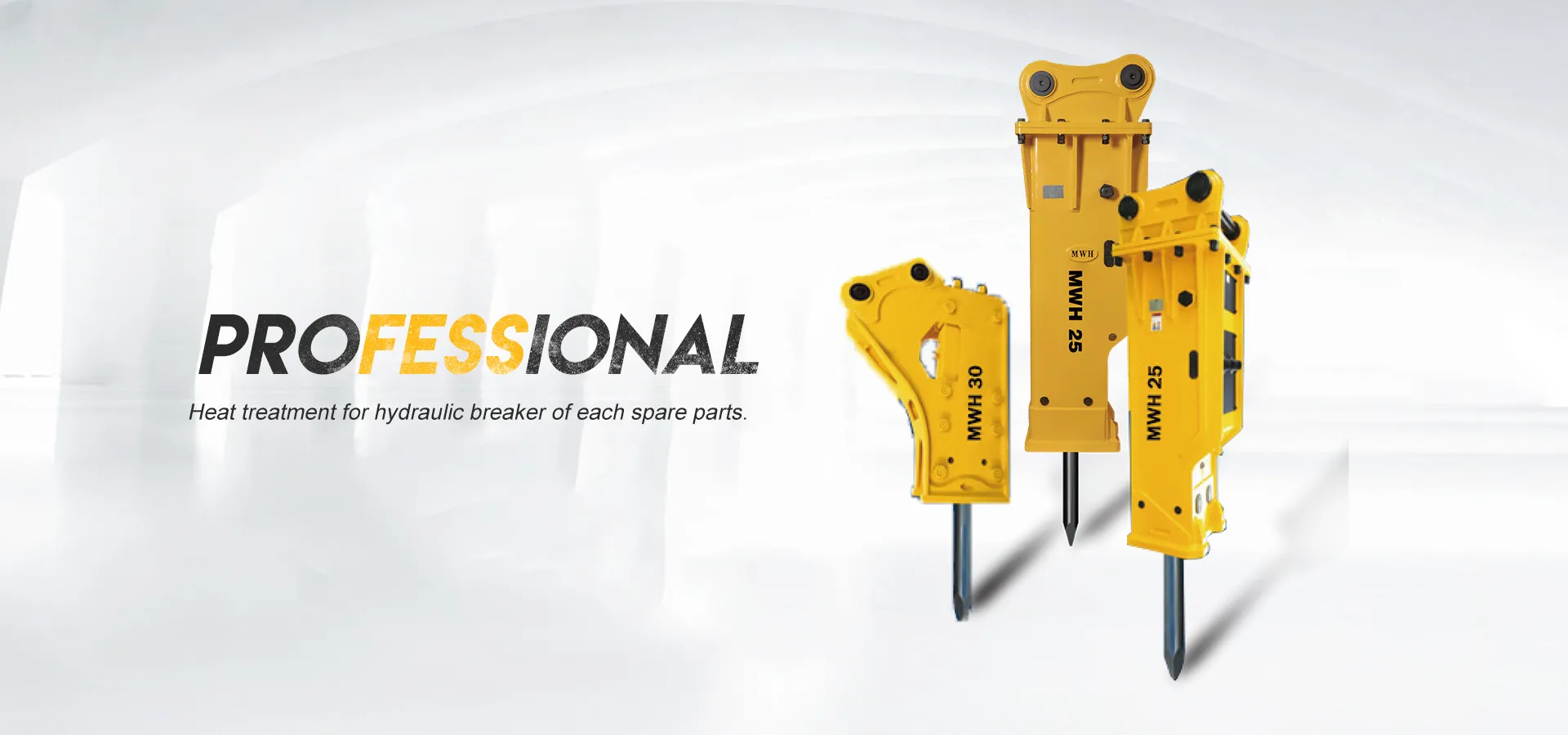
Maanshan Dongqiang Machinery Manufacturing was established in 2014. Our factory currently covers an area of more than 20 acres and is currently being expanded to cover an area of more than 50 acres. It has 83 employees and annual sales of $13.8 million. Our factory mainly produces hydraulic breakers, cylinders, pistons, chisel pins, bushings, bolts, chisels, etc.
Our Advantages
Professional CNC Technology
Our factory uses professional CNC technology and equipment to enable our products to be manufactured with high precision, efficiency, and flexibility, thus improving product quality and production efficiency.
High-Quality Materials
The raw materials for our products come from large steel mills, so we can ensure that the steel used in the production of our products is of stable quality, meets specifications, and has a certain degree of traceability.
Durable Components
The components of our hydraulic crushing equipment are heat treated so they are more durable, more resistant to wear and tear, and able to withstand high pressure and heavy load operating environments.
OEM Available
Our company provides spare parts and OEM services to well-known breaker brands and large domestic trading companies. We also provide products and services to overseas customers.



Hydraulic hammers/breakers are essential pieces of equipment in the construction equipment industry. They are used in both building and demolition for the construction industry. For construction, they can be used to dig holes, break up rock, or break the dirt to dig a hole more easily.

High Efficiency in Breaking Tough Surfaces
● Power-Packed Performance: Their design, leveraging the might of hydraulic force, ensures they can exert tremendous pressure on a specific point. This makes them incredibly effective at breaking tough surfaces like concrete, rocks, and asphalt.
● Continuous Operation: Unlike manual tools which rely on repeated human effort, hydraulic hammers offer continuous operation.
● Less Fatigue: Given that the machine does most of the heavy lifting, there’s significantly less fatigue on the operator’s part.
Adaptability: Compatibility with Various Carriers
● Wide Range of Carriers: These hammers can be easily attached to a variety of carriers, including excavators, backhoes, skid steers, and more. This makes them incredibly versatile, as they can be used on whatever machinery is available or most suitable for a particular job.
● Different Sizes for Different Jobs: Hydraulic hammers come in various sizes, from smaller models suitable for light tasks and compact carriers, to massive units designed for large excavators and major demolition jobs.
Precision and Reduced Noise Compared to Other Tools
● Accurate Demolition: Unlike some other demolition tools that might cause collateral damage, hydraulic hammers are precise. Their focused impact means they break what they’re supposed to without causing unnecessary destruction to surrounding structures or materials.
● Noise Reduction: While no heavy machinery is entirely silent, hydraulic hammers are designed to produce less noise compared to many other demolition tools.
● Fewer Vibrations: The efficient design of hydraulic hammers means they produce fewer vibrations compared to some other tools.

Demolition
Hydraulic hammers are commonly used in demolition projects to break through concrete structures, buildings, pavements, and other materials. They provide a powerful and efficient method for breaking down large structures into smaller, more manageable pieces.
Quarrying and Mining
Hydraulic hammers are widely used in quarrying and mining operations to break through rock formations. They are used to extract stone, minerals, and ores by breaking them into smaller sizes for further processing or extraction.
Construction
Hydraulic hammers are essential tools in the construction industry. They are used for tasks such as breaking up concrete foundations, removing old structures, excavating rock and hard soil, and preparing surfaces for construction.
Road Construction and Maintenance
Hydraulic hammers are utilized in road construction and maintenance projects. They are used to break and remove existing pavement, concrete, or asphalt surfaces, allowing for repairs, resurfacing, or the creation of new roadways.
French mathematician, scientist, and inventor Blaise Pascal made significant contributions to mathematics, geometry, and mechanical engineering. The hydraulic hammer was developed due to his discovery of Pascal’s Law, often known as the law of hydrostatics. According to this rule, pressure applied to one area of enclosed liquid results in equal pressure being applied to all other sites.
The lower side of the piston faces the chamber when high pressure comes in, which alters the flow direction. The chamber and low-pressure circuit then reverse the piston action. As opposed to the upper side, the lower side now experiences a more significant force, and the piston rises gradually. Now, the gas sealed in the gas chamber is compressed by the piston.
Due to the area difference between the valve’s upper and lower faces, the valve begins to lift as the piston rises and oil pours into the chamber. The high pressure enters the chamber for piston reversion when the valve rises and is connected. The piston begins to descend because of the difference in the area between the top and lower faces receiving the same pressure. The pressure of the gas in the gas chamber increases the piston’s speed as it descends.
The accelerating piston strikes the chisel. The oil enters the chamber as the piston is descending and is changed to low pressure when it reaches the chamber. At this point, the pressure in the chamber supporting the valve is reduced. The pressure inside the chamber stays high at all times. As a result, the valve lowers. When the valve lowering procedure is finished, the chisel striking will continue.
Components of Hydraulic Hammers
Control Valve and Piston
A hydraulic hammer’s control valve and the piston are the only two moving parts. These components are part of the cylinder assembly — the section of the hammer that generates power and creates movement. The valve rotates to control the oil flow’s direction, while the hydraulic hammer piston moves up and down to control the movement of the chisel.
Head Cap
The head cap contains nitrogen gas critical to the hammer’s performance. Steady gas pressure in the accumulator absorbs system spikes and helps generate power.
Bush
The hydraulic hammer bush provides wear resistance and protects the frame connecting the chisel, preventing outside dirt and debris from entering the unit and obstructing smooth movement.
Chisel
This part connects to the hammer and performs the actual crushing or breaking of material.
Chisel Pin
The chisel pin keeps the chisel in place during impact.
Front Cover
The front cover secures the chisel and chisel pin.
Through Bolts
These bolts hold the head cap and cylinder together.
Grease
Hydraulic hammer grease lubricates the chisel to keep the point in peak working order. Insufficient lubrication can shorten the life of the front cap, the chisel pins and the chisel point.
Hydraulic Hammer Chisel Bit Types
Hydraulic breakers can use various chisel tools to perform different breaking actions. Because chisels make direct contact with the materials that need crushing, they wear out over time. Choosing the appropriate chisel type for your application can improve your hammer’s overall life span. Several examples of the most common types include:
Moil Points
Moil points are the most versatile tools to handle any general breaking application and come standard with many hammers. Moil points are ideal for medium to hard rocks and work well for breaking up concrete with rebar.
Wedge Points
Wedge points are perfect for flat concrete breaking, bedrock excavation, ditch excavations and operations on the face of a slope.
Blunt Chisel
Blunt tools are excellent for demolishing oversized rocks, slabs and heavy boulders. These chisels are among the most durable and stand up to the harshest conditions.
Conical Point
Conical chisels are ideal for various multipurpose applications, including breaking up hard stone, extra-hard rock or reinforced concrete.
Complete a Regular Visual Inspection
Regular visual inspections are a straightforward and effective method for maintaining a hydraulic hammer in working order. Before using the equipment, these tasks should be conducted to detect any signs of anticipated damage or wear on its components. This proactive maintenance approach can help prevent unexpected breakdowns and costly repairs, ensuring the continued reliability of the hammer.
● Daily inspections entail checking critical components for signs of damage or looseness. These include attachment pins, retainers, locks, bracket cap bolts, nuts, tool retainers, hoses, connectors, and ball valves. If any of these elements are found to be compromised, they must be immediately repaired to ensure safe and efficient operation.
● Weekly inspections include assessing cracks or excessive wear on specific areas like the surface, retainers, and the piston strike face. Fractures or signs of wear should be remedied promptly to maintain the breaker’s integrity and performance. This proactive approach helps to guarantee that the equipment remains in excellent condition for its intended tasks.
● Annual inspections require the worker to inspect hydraulic breaker couplers every 100 operating hours. The constant fluid pressure might cause wear on these connectors, necessitating routine inspections. Additionally, contractors should check the system’s flow and pressure annually to see whether it operates within normal parameters.
Grease the Hydraulic Hammer Attachment
Greasing the hydraulic breaker is a critical maintenance task because it lubricates the equipment and clears debris. The specialized substance employed in this process is formulated to withstand higher temperatures and is applied between the bushings and steel components. This provides a more effective and durable lubrication than standard lubricants.
There are two approaches to greasing hydraulic hammers: manual and automatic. In manual greasing, the worker should press the tool inside the rock breaker firmly to regulate the quantity of grease. Excessive application can result in the immobilization of moving elements within the chamber. This can lead to seal failures or inadvertent grease entry into the hammer’s system upon activation.
Automatic greasing ensures a consistent lubricant supply and eliminates manual intervention at set intervals. This system can be directly mounted on the cradle or incorporated as a larger tank on the machine itself. By adopting an automated approach, workers can save labor-intensive time and money in the long run.
Inspect Nitrogen Pressure
Various factors such as temperature, operating conditions, and usage patterns determine the appropriate nitrogen charge pressure. Consulting the operation and maintenance handbook can help identify the ideal pressure tailored to specific applications. If uncertain, seek assistance from a service provider to ensure optimal performance and prevent potential damage.
Examine Hydraulic Hoses
Proper hose length and secure connections are vital to prevent them from impeding the extension of the breaker’s attachment. Hoses that are too short can limit the reach and affect the equipment’s performance. Conversely, overly long components may become disengaged or snag on objects. This emphasizes the importance of maintaining the correct dimensions for ease of installation and extended operating time.
Preventative hydraulic hose maintenance minimizes the likelihood of equipment failures, which can be costly and disruptive. Addressing minor issues before they escalate not only safeguards against expensive repair bills but also reduces overall operating costs.
Job-Specific Requirements and Demands
Every construction job has unique demands, such as the type of material to be broken, the scale of the project, and the site conditions. Understanding these requirements is crucial for selecting a hydraulic hammer that can meet the specific challenges of your job.
Efficiency and Productivity Considerations
The right hydraulic hammer should optimize your work efficiency and productivity. It should provide a consistent and powerful impact force, reducing the time and effort required for each task.
Performance and Durability of the Hydraulic Hammer:
Choosing a durable and reliable hydraulic hammer is essential for long-term performance. Consider factors such as build quality, engineering design, and the reputation of the manufacturer to ensure the longevity and effectiveness of your investment.
Impact Force and Breaker Tool Options
Different jobs require varying impact forces and breaker tool options. Evaluate the power and impact energy of hydraulic hammers to ensure they align with your project’s requirements and the materials you will be working with.
Adaptability to Different Excavation and Demolition Tasks
The versatility of a hydraulic hammer is vital, as it should be able to handle a range of excavation and demolition tasks. Consider the hammer’s compatibility with different equipment and its adaptability to different working conditions.
Our Factory
Our factory is equipped with advanced equipment such as Central Cylinder Dedicated Eccentric Groove Milling Machine, CNC High-Precision Cylindrical Grinding, Cylinder Block Special Large Punching Machine, High Precision Horizontal Machining Center, Special Crescent Groove Milling For Cylinder, Vertical Machining Center, etc., which are high-precision products Provides the basis for rapid production.


Ultimate FAQ Guide to Hydraulic Hammers
Q: What is a hydraulic hammer drill?
Q: How to store hydraulic hammer?
● Lay the breaker on wooden blocks. Remove the pins to disconnect the breaker from the boom.
● Remove the tool and ensure the retaining pins, bushings and piston bottom are well greased.
● Reinstall the tool.
● Cover with a tarp.
Long Term Storage – Preferred Method
● Remove the tool. Liberally grease inside the front head, piston bottom, and retaining pins.
● Release the cushion chamber gas pressure.
● Push the piston up inside the breaker.
● Reinstall the tool.
● Cover with a tarp.
Long Term Storage – Alternate Method
● Store breaker upright in a safety stand.
● DO NOT release the cushion chamber gas pressure.
● Allow the breaker weight to push the tool up into the breaker.
Q: What is the difference between a hydraulic hammer and a diesel hammer?
Q: Can you use a hydraulic hammer underwater?
Q: What are hydraulic hammer bits made of?
Q: How often do you grease a hydraulic hammer?
Every hydraulic hammer requires hammer grease every two working hours. For hammers with a tool up to 3 inches in diameter, 10 to 15 “pumps” from a grease gun will work fine.
Q: How much does a hydraulic hammer weigh?
Q: What is the difference between a vibratory hammer and a hydraulic hammer?
Q: What is a hydraulic hammer for pile driving?
Q: Why is my hydraulic hammer not hitting hard?
Q: What is the nitrogen pressure for a hydraulic hammer?
Q: What are the advantages of hydraulic hammers?
Q: What are the advantages of hydraulic hammers?
One of the primary advantages of hydraulic hammers is that they drive and extract piles much more quickly than traditional pile drivers. Also, the ability to remove piles makes them a practical option for projects that require the demolition of existing structures or repairing existing piles. Time is something every construction manager knows you can’t get back, and the high efficiency of hydraulic systems will help keep projects on schedule even when unforeseen obstacles appear. Vibratory hammers can drive a pile that would take a traditional rig up to an hour in as little as ten minutes.
Quiet Operation
Another primary benefit of hydraulic vibratory hammers is that they generate considerably less noise than traditional pile drivers. This feature makes them an ideal solution for use in residential or urban sites where noise ordinances may present compliance issues. Traditional impact hammers cause loud, repetitive bangs with each blow. Because vibratory hammers “cut” the soil around the pile instead of driving it down with force, they won’t draw noise complaints from neighboring businesses or residents, which can cause costly stop-work orders from local officials.
Ease of Transporting Hydraulic Vibratory Hammers
Because hydraulic hammers are much smaller and lightweight than other pile driving equipment, they can be shipped or transported in a single load. This reduces transit time as well as freight and transportation costs. Transporting a traditional piling rig can require numerous loads followed by a lengthy installation process. Hydraulic vibratory hammers install easily on an excavator or crane and require less maintenance as well.
Hydraulic Vibratory Hammers Require Smaller Crews
In many cases, hydraulic hammers can be operated by a two-person crew. This allows for dynamic operation on smaller projects where site conditions present space challenges. An operator-assisted by a ground man can get significant work done when compared to traditional piling rigs. This dynamism allows for contractors to safely and efficiently complete projects with lower labor costs. Also, they are more straightforward to operate, and crews can help monitor the rig to avoid malfunction or breakdown with preventative maintenance.
Q: How do hydraulic hammers work?
Q: How should hydraulic hammers be stored?
Q: Do hydraulic hammers need stand or support?
Q: Is compatibility of hydraulic hammers important?
Q: Can hydraulic hammers be used in complex environments?
Q: What safety features do hydraulic hammers have?
Q: How to choose the size of hydraulic hammers?
As one of the leading hydraulic hammers manufacturers in China, we warmly welcome you to buy high-grade hydraulic hammers made in China here from our factory. All customized products are with high quality and low price.
Excavator Concrete Crusher, SB81 for breaker, Inner Bush for Breaker