

Breaker hammer
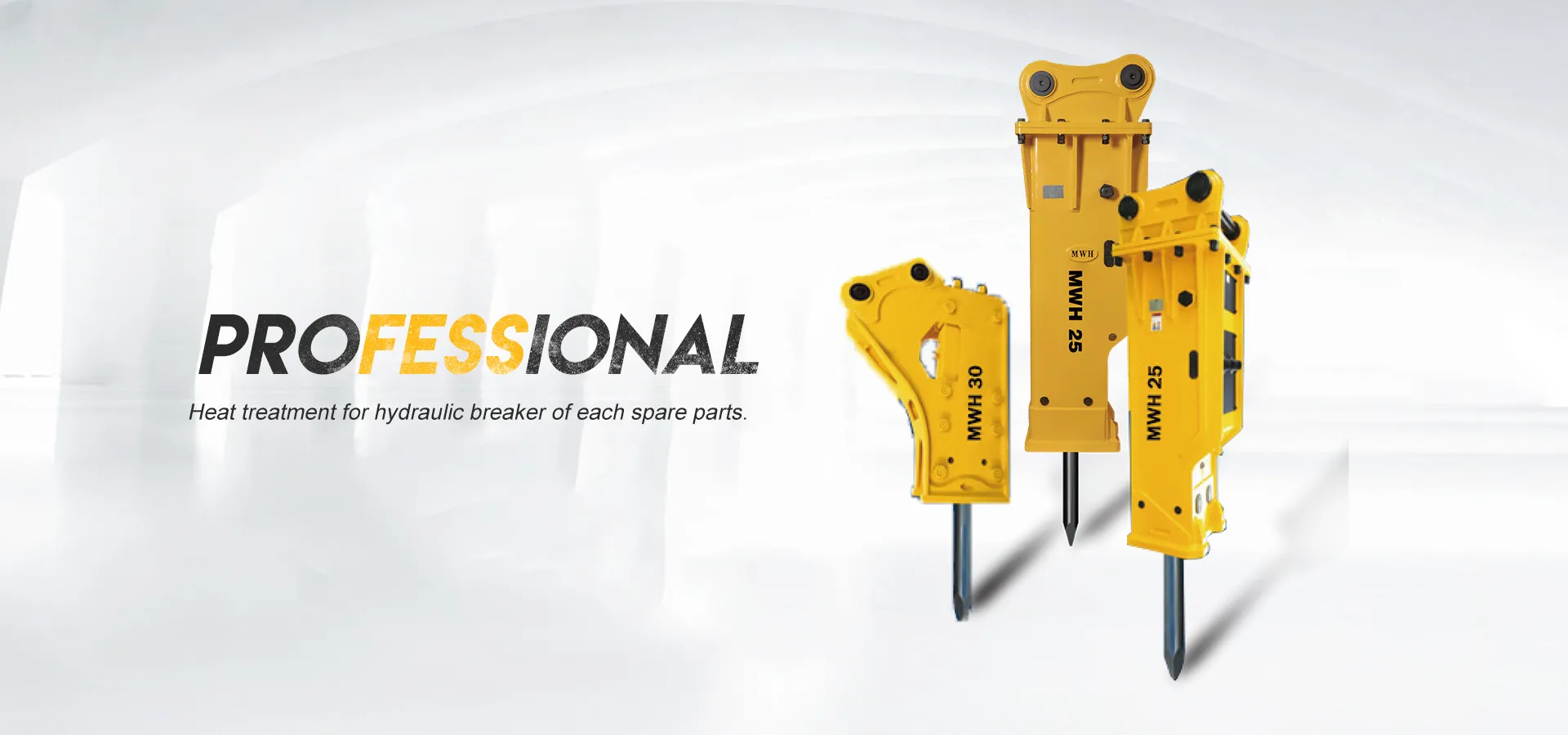
Maanshan Dongqiang Machinery Manufacturing was established in 2014. Our factory currently covers an area of more than 20 acres and is currently being expanded to cover an area of more than 50 acres. It has 83 employees and annual sales of $13.8 million. Our factory mainly produces hydraulic breakers, cylinders, pistons, chisel pins, bushings, bolts, chisels, etc.
Our Advantages
Professional CNC Technology
Our factory uses professional CNC technology and equipment to enable our products to be manufactured with high precision, efficiency, and flexibility, thus improving product quality and production efficiency.
High-Quality Materials
The raw materials for our products come from large steel mills, so we can ensure that the steel used in the production of our products is of stable quality, meets specifications, and has a certain degree of traceability.
Durable Components
The components of our hydraulic crushing equipment are heat treated so they are more durable, more resistant to wear and tear, and able to withstand high pressure and heavy load operating environments.
OEM Available
Our company provides spare parts and OEM services to well-known breaker brands and large domestic trading companies. We also provide products and services to overseas customers.
-
 DQ OEM ODM Service Available SB - 81A Mini Hydraulic Brea...Company Profile Maanshan DongQiang Machinery Manufacturing Co.,Ltd. was established in 2014.The factory now covers an area of more than 20 acres.However,an expansion is currently underway.It willAdd to Inquiry
 -
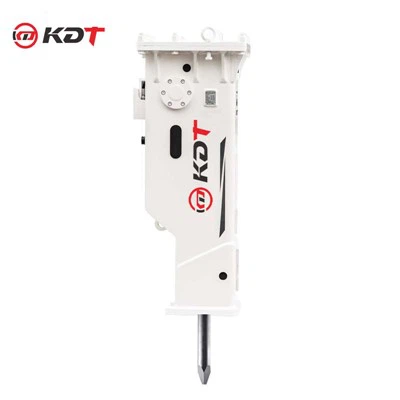 DQ-40 Mini Excavator 0.5-1.5t Compact Small Excavator For...Company Profile Maanshan DongQiang Machinery Manufacturing Co.,Ltd. was established in 2014.The factory now covers an area of more than 20 acres.However,an expansion is currently underway.It willAdd to Inquiry
 -
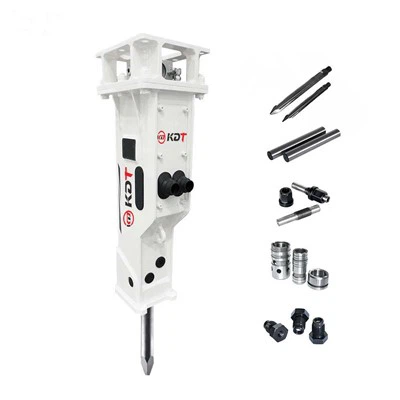 DQ 100mm Chisel BLT-100B Hydraulic Hammer PC110 Municipal...Company Profile Maanshan DongQiang Machinery Manufacturing Co.,Ltd. was established in 2014.The factory now covers an area of more than 20 acres.However,an expansion is currently underway.It willAdd to Inquiry
 -
 High Frequency Rock Breaker Powerful Demolition Hammer Du...Company Profile Maanshan DongQiang Machinery Manufacturing Co.,Ltd. was established in 2014.The factory now covers an area of more than 20 acres.However,an expansion is currently underway.It willAdd to Inquiry
 -
 Right-angle Breaker Hammer Compatible With Various Excava...Company Profile Maanshan DongQiang Machinery Manufacturing Co.,Ltd. was established in 2014.The factory now covers an area of more than 20 acres.However,an expansion is currently underway.It willAdd to Inquiry
 -
 Imported Steel Is Used To Create An Ultra-long Service Li...Company Profile Maanshan DongQiang Machinery Manufacturing Co.,Ltd. was established in 2014.The factory now covers an area of more than 20 acres.However,an expansion is currently underway.It willAdd to Inquiry
 -
 Iow-noise And Low-vibration Environmentally Silence Break...Company Profile Maanshan DongQiang Machinery Manufacturing Co.,Ltd. was established in 2014.The factory now covers an area of more than 20 acres.However,an expansion is currently underway.It willAdd to Inquiry
 -
 DQ Concrete Pavement Demolition SB-121 Hydraulic Breaking...Company Profile Maanshan DongQiang Machinery Manufacturing Co.,Ltd. was established in 2014.The factory now covers an area of more than 20 acres.However,an expansion is currently underway.It willAdd to Inquiry
 -
 DQ Steer Breaker Attachment Mini Skid Steer Breaker Skid ...Company Profile Maanshan DongQiang Machinery Manufacturing Co.,Ltd. was established in 2014.The factory now covers an area of more than 20 acres.However,an expansion is currently underway.It willAdd to Inquiry
 -
 Impact energy of the ultra-high frequency hydraulic break...Company Profile Maanshan DongQiang Machinery Manufacturing Co.,Ltd. was established in 2014.The factory now covers an area of more than 20 acres.However,an expansion is currently underway.It willAdd to Inquiry
 -
 DongQiang Good Quality Hydraulic Breaker Hammer DQ 43 for...Trademark:DQ. Delivery :Fast. OEM:Support.Add to Inquiry
 -
 DongQiang Hydraulic Rock Breaker DQ81 for 19~25 Tons Exca...Certification:ISO9001. Operating Weight:2130kg. Delivery:FastAdd to Inquiry



A breaker is a powerful percussion hammer fitted to an excavator for demolishing hard (rock or concrete) structures. It is powered by an auxiliary hydraulic system from the excavator, which is fitted with a foot-operated valve for this purpose. Additionally, demolition crews employ the hoe ram for jobs too large for jackhammering or areas where blasting is not possible due to safety or environmental issues.

Types of Breakers
Small Class
Small class hydraulic hammers are ideal for indoor renovation projects. They can also be used for digging fence posts and getting through concrete for small patch jobs. Small hydraulic hammers use less PSI but move more quickly than the other two classes. Small class hydraulic hammers are quick and efficient when they’re being used on the right types of jobs.
Medium Class
Medium class hydraulic hammers are the most common. The PSI in this class ranges from 2,000 – 3,000. This means it offers plenty of impact on the majority of projects but can still create contact with the ground more frequently. Landscaping boulders, large concrete jobs, and a variety of utility projects all use a medium class hydraulic hammer. Medium class hammers provide an impact almost as strong as a large class while hitting the ground almost as often as a small class hydraulic hammer can. That’s what makes medium-class truly the best of both worlds!
Large Class
Large class hydraulic hammers should only be used for big jobs such as mining or excavation projects. You shouldn’t use a large class hydraulic hammer without experience or supervision by someone with experience. With a powerful PSI of over 2300, the hammer comes down with a heavy force. Because the force is so hard, the hammer comes down fewer times per minute than small or medium hydraulic hammers do. The large class hydraulic hammer attachments are very heavy and require a proper carrier for them to be used.
Highly Efficient
Excavators with hydraulic breaker attachments are very efficient. Due to the fact that you can do the work that takes weeks with manpower just in a few hours. You will be able to save a great deal of time and manpower by using this method. Additionally, it is much easier to deal with the mess left behind. You can easily transport and dispose of all the debris since it is in many small pieces. Today, many construction companies heavily rely on these machines on a daily basis.
Fuel Consumption is Low
Despite popular belief, hydraulic breakers don’t consume a lot of fuel. So your project budget isn’t drained while it is in use. Because it consumes less fuel than other machinery that can perform the same task. To purchase one of them for your business or project will be a long-term investment. However, having one of them on your team will save you a lot of money in the long run.
Less Noise Pollution
These types of heavy machinery are believed to produce a lot of noise. But contrary to popular belief, they do not. When it comes to destroying anything by a powerful force, it can be very disruptive. However, using a hydraulic breaker can greatly reduce the noise around your construction or demolition site. Consequently, it will not interfere with your other work, and you will also receive fewer outside complaints due to the noises.
Risk Reduction
It is always a good idea to reduce workplace risks by using a safe tool. In these situations, a hydraulic breaker will come in handy. When operated by an experienced operator, it is a piece of machinery that is safe to use. It will reduce many risks related to your field and increase your overall safety. Every field that has to do with construction has a high risk of causing serious injury or death to those who work in them. Having a hydraulic breaker will change that drastically and will safeguard all your workers.
Application of Breaker

01.Construction Industry
02.Mining and Quarrying
03.Agriculture
04.Landscaping
05.Utilities
06.Steel and Recycling Industry
Hydraulic hammers/breakers use hydraulics to work, which is the reason behind their name, but it is also what sets them apart. Pascal’s law, which is a mechanical principle in mechanics, is the basic function of the hydraulic hammer. By putting pressure on one part of a fluid, it transfers the pressure to all areas of the fluid, which multiplies the force. Hydraulic Breakers use hydraulic oil, which cannot be compressed, with pressure stored in a small canister. This hydraulic system supplies the force for hitting. Regular, hand-held hammers don’t even compare to the strike of a hydraulic breaker.
There are two main types of hydraulic breakers, with different valves. One type has an inner valve while the second type has an outer valve. The inner parts are mostly the same, with the necessary cylinder to provide the pressure and a piston to convert the energy into the hammering action. Other similar hydraulic parts include:
● Side rods: Designed for supporting mounted hammer applications
● Nitrogen Chamber: A low-pressure chamber to help supply power
● Main Valve: The only moving part, other than the piston, to help hammer
● Front Cap: Keeps the hammer attachment in place during impact
Cylinder
A cylinder that is the most important part of the hydraulic system. This contains the moving piston which strikes the tool. The seals for both ends of the piston are also located in the cylinder. The seals for the upper end of the piston are located in a removable seal retainer while the seals for the lower end of the piston are located in proves machined directly into the cylinder.
Piston
A piston transfers impact power to the tool, generated by hydraulic power. It is also present in both types of hydraulic breakers which convert kinetic energy into hammering energy a front head is featured to support the machine and one back head which contains nitrogen gas.
Valve
The valve controls reciprocates piston action with the hydraulic fluid distribution.
Seal Retainer
The seal retainer has oil seals to seal Nitrogen(Nz) gas in the back head, and to prevent hydraulic o leakage.
Front Head Assembly
this retains the tool, using the tool pins. By removing these pins, the tool can be changed.
Ring Bush
This guides the tool, Ring Bush limits the uppermost position of the tool. It is consumable parts, which should be checked for wear limits. If needed, they should be replaced.
Chisel
This transfers piston impact power to the objects. We recommend various tool shapes according to working circumstances.
Rod Pin
This is installed on the front head, and prevents the tool from coming off.
Back Head Assembly
This contains the cushion chamber charged with nitrogen(N2) gas that is compressed during upward strokes of the pistoning and serves to provide maximum absorption of the piston recoil, efficiently storing this energy for the next blow.
Through Bolts
These are used to assemble the front head, the cylinder, and the back head. They have to be constantly tightened to the specified torque. Inspect the bolts for loosening, and re-tighten them weekly.
Maintenance Tips for Breaker
Complete a Visual Inspection
Although it only takes a few minutes to visually inspect a hydraulic breaker for wear and tear, many operators overlook this step. A visual inspection should be completed each time the breaker is used to help identify any worn or damaged components and prevent unexpected downtime. Check hydraulic hoses, the breaker shell, attachment pins, tool retainers and locks; and the tool point, for any cracks or gouges.
Use the Correct Maintenance Tools
Many breaker manufacturers provide a specialized check tool to measure the breaker’s lower bushing, top angle of the breaker tool, and retaining pins. Using this maintenance tool for its recommended checks will decrease the likelihood of early component failure.
The first step to using the maintenance tool is removing the retainer pins and breaker tool. Since you have the breaker tool removed, it is a good opportunity give it an inspection for any cracks and use the maintenance tool to check the top angle. Also, check the retainer pins for wear and/or damage. Next, check the breaker’s bushing. The maintenance tool is inserted into the bushing, and if it can be turned flat so that it fits end-to-end inside the bushing, the bushing needs to be replaced. This simple check takes approximately 15 to 30 minutes and should be conducted once a week or every 50 hours of attachment use.
Examine Hydraulic Hoses
Hydraulic hoses from the excavator should be the correct length and always be routed properly to help decrease wear and potential downtime. On the flip side, hoses longer in length can catch or become disengaged on rebar and other debris. Some breakers come with standard hydraulic hoses that are the correct length for each of their machines to make installation easy and maximize operating time and hose protection.
Grease the Attachment
Greasing the hydraulic breaker is the most important maintenance item because it lubricates and clears the tool bushing area of debris. Greasing can be done manually or via an automatic greasing system. If you are using a hydraulic breaker that needs to be manually greased, make sure to follow manufacturer recommendations — typically every 1 to 2 hours — to reduce buildup, tool wear and bushing wear. Some manufacturers feature an automatic lubrication (greasing) system for their hydraulic breaker models that delivers a constant flow of grease and eliminates manual greasing intervals. The automatic system can save you labor-intensive time, money down the road and help to avoid over-greasing the hydraulic breaker.
Utilize the Right Tool Point
Matching the tool point to its respective application can significantly maximize jobsite production and extend the breaker’s life.
Other available tool points include:
● Chisel tool point — Provides more breaker control when a breaker is being used for general excavation or cutting concrete for trenching.
● Blunt tool point — Easily breaks and fractures large pieces of concrete or block in heavy construction applications.
● Pyramidal tool point — Used for breaking hard, abrasive material in demolition applications.
Inspect Nitrogen Pressure
Determining the proper nitrogen charge pressure depends on the application and outside working temperature. The attachment’s Operation and Maintenance Manual gives you the recommended nitrogen pressure setting for your application and working temperature.
Factors to Consider Before Choosing a Breaker
Type of Job
The job’s size and weight will determine the type of hydraulic rock breaker needed. A more significant job will require a bigger, more powerful breaker.
Type of Material
Different hydraulic rock breakers are better suited for breaking apart different materials. For example, a side-type breaker is better for breaking concrete walls, while a top-type breaker is better for breaking apart large rocks.
Machine Compatibility
Ensure that the hydraulic rock breaker is compatible with the carrier machine, such as an excavator or backhoe loader used for the job.
Operating Pressure and Flow Rate
The operating pressure and flow rate of the hydraulic system will determine the power of the hydraulic rock breaker. Choose a breaker compatible with the carrier machine’s hydraulic system.
Noise Level
If you’re working in a residential area or other location where noise pollution is a concern, consider a silence-type breaker that operates at a lower noise level.
Maintenance Requirements
Consider the maintenance requirements of the hydraulic rock breaker, including the frequency of routine maintenance and repair needs.
Our Factory
Our factory is equipped with advanced equipment such as Central Cylinder Dedicated Eccentric Groove Milling Machine, CNC High-Precision Cylindrical Grinding, Cylinder Block Special Large Punching Machine, High Precision Horizontal Machining Center, Special Crescent Groove Milling For Cylinder, Vertical Machining Center, etc., which are high-precision products Provides the basis for rapid production.


Ultimate FAQ Guide to Breakers
Q: What does a hydraulic breaker do?
Q: How long should you use a hydraulic breaker for?
Q: Why is my hydraulic breaker not working?
Q: What is a hydraulic hammer used for?
Q: How often do you grease a hydraulic hammer?
Every hydraulic hammer requires hammer grease every two working hours. For hammers with a tool up to 3 inches in diameter, 10 to 15 “pumps” from a grease gun will work fine.
Q: What are the common hydraulic system troubleshooting tools and techniques?
The first step in troubleshooting a hydraulic system is to perform a visual inspection of the components and connections. This can help you identify obvious signs of damage, wear, or leakage. You should look for cracks, dents, corrosion, loose fittings, broken seals, or fluid stains on the hoses, pipes, valves, cylinders, pumps, and reservoirs. You should also check the fluid level and quality in the reservoir and look for any contamination, such as dirt, water, or air bubbles.
Pressure Gauge
A pressure gauge is a vital tool for measuring the pressure in different parts of the hydraulic system. By comparing the actual pressure readings with the expected or normal values, you can determine if there is a problem with the pump, relief valve, or any other component that affects the pressure. For example, if the pressure is too low, it could indicate a leak, a clogged filter, a worn pump, or a faulty relief valve. If the pressure is too high, it could indicate a blockage, a misaligned valve, or an overloading of the system.
Flow Meter
A flow meter is a device that measures the flow rate of the hydraulic fluid in the system. By monitoring the flow rate, you can assess the performance and efficiency of the pump and the valves. You can also detect any restrictions or losses in the flow due to leaks, contamination, or damage. A flow meter can help you troubleshoot issues such as slow or erratic cylinder movement, overheating, or noise.
Temperature Gauge
A temperature gauge is a tool that measures the temperature of the hydraulic fluid in the system. The temperature of the fluid affects its viscosity, which in turn affects the flow and pressure. If the temperature is too high, it could cause the fluid to thin out and lose its lubricating properties, resulting in friction, wear, and damage. If the temperature is too low, it could cause the fluid to thicken and increase the resistance and pressure in the system. A temperature gauge can help you troubleshoot issues such as overheating, cavitation, or poor efficiency.
Q: Which is better pneumatic breaker or hydraulic breaker?
Q: How does a hydraulic breaker work?
Q: How to define a hydraulic hammer or breaker?
Q: What are the types of hydraulic breakers?
Q: What are the recommendations for the correct use of hydraulic breakers?
● Breakers must NEVER hammer "in idle": idle strokes cause early wear and breakage of the tool retainer pin.
● DO NOT use hydraulic breakers to move heavy masses with the point or casing.
● Hydraulic breakers must NOT impact the same point for more than 30 seconds. If you persist too long in the same position, the hydraulic fluid overheats and there is a risk of the piston seizing.
● DO NOT submerge the breaker in water beyond the extension of the tool. If this is necessary for underwater work, refer to your nearest authorized assistance centre to provide the hydraulic breaker with adequate underwater fittings.
Q: What are the functions of Breakers?
Primary breaking occurs when the structure is still in the ground and hasn’t been extracted. It is a demanding process that requires high-impact energy and expenditure. This process occurs in foundation work, concrete removal for sidewalks, and general demolition. A blast-and-drill approach is best when these events happen.
Secondary Breaking
Secondary Breaking is when the machine’s broken object has already been extracted from the ground and requires extra work. This type of breaking is perfect for quarries and breaking up larger objects from blasts and drills. This process is also commonly adopted for mine drilling.
Q: What should I pay attention to when using breaker?
Q: What are some risks associated with using a breaker?
● Flying debris, such as rock chunks
● Leaking hydraulic fluid, which can pierce the skin
● Pinch points
● Damage to the breaker and the carrier machine
● Eye and ear damage from loud noise and flying debris
● Hitting gas and electrical lines if using the breaker to loosen dirt
● Inhaling excessive dust or other harmful materials in the air
Q: How do I choose the right size of concrete breaker?
Q: How long do hydraulic hammers last?
A hydraulic hammer or breaker is an investment, and with the proper maintenance and care, it can last about 8-10 years. However, this ultimately depends on how well it is cared for during and between uses.
As one of the leading breaker manufacturers in China, we warmly welcome you to buy high-grade breaker made in China here from our factory. All customized products are with high quality and low price.
Medium Hydraulic Breaker, Seal Kit for Breaker, 50 Tons Excavator Hammer